When a long relationship ends, your body doesn't know what to do with itself
You've spent years, maybe decades, calibrating your pleasure around someone else. Your timing adjusted to theirs. Your desires shaped themselves around what was convenient, available, or possible in your partnership. Even when you had orgasms, they were part of a duet. Solo pleasure felt unfamiliar, maybe even selfish.
Now they're gone. And suddenly your sexuality is yours again. That sounds liberating in theory. In practice, it can feel completely disorienting.
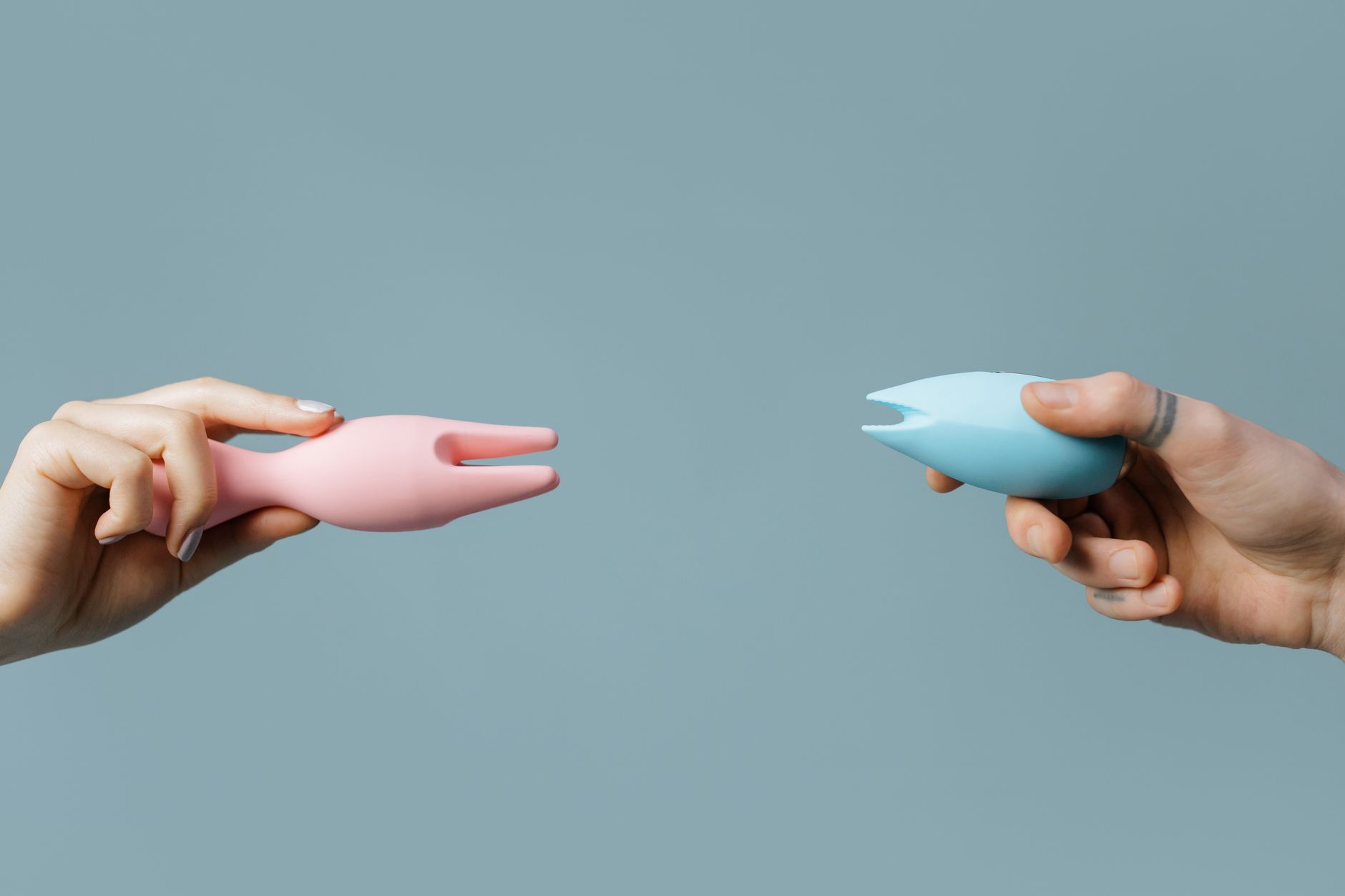
The good news: your body remembers how to feel pleasure without an audience. It just needs a little time, patience, and the right tool. A lemon clitoral vibrator like the Lem can be exactly that.
What happens to desire when a long-term relationship ends
There's a grief phase, and it usually comes before the pleasure phase. Some people feel that grief for weeks. Others for months. That's completely normal. During this time, desire might disappear entirely, and that's not a sign something's broken. It's a sign your nervous system is processing loss.
But underneath that grief, something else is happening. Your body is starting to remember that it has its own desires, separate from another person's needs or schedule. Once the acute grief passes, that reclamation of solo sensation can feel urgent, almost hungry.
That's the moment when reaching for a lemon vibrator makes sense. Not as a way to rush past grief, but as a gentle invitation back to your own body.
Why the Lem is particularly good for this transition
After years in partnership, you might have lost touch with what kind of stimulation actually feels good to you without external pressure. Traditional vibrators require you to know exactly what intensity and pattern you want right away. The Lem works differently. Its suction technology means you don't have to guess. You don't have to press hard or find the exact right angle. The sensation is gentler on entry and becomes more intense gradually as you relax into it.
That matters because your pelvic floor might be tight from stress and transition. The Lem's approach gives tight muscles permission to soften. It feels less aggressive, more like your body is being invited into pleasure rather than pursued.
For people rediscovering solo sensation after long-term partnership, that difference is significant.
Starting with the right headspace
Honestly, your first few sessions aren't about orgasm. They're about relearning what your body enjoys when there's no one else in the room.
Set aside 20 to 30 minutes when you won't be interrupted. That's not indulgent. That's practical. Your nervous system needs time to calm down before pleasure is accessible. If you're listening for footsteps or checking your phone, your body won't fully relax.
Light a candle, dim the lights, or don't. Put on music that makes you feel something. Use lube, even if you think you don't need it. Lube isn't failure. It's information. It tells your body that this is pleasurable and worth continuing.
Then just spend time touching yourself without the Lem. This matters. Your hands are your baseline. You need to remember what kind of touch feels good when you're not performing for anyone.
How to use the Lem when you're rediscovering sensation
Start on the lowest setting. Seriously. You're not racing anywhere. The Lem has seven settings, and most people fresh out of long-term relationships find that settings 1 through 3 are the entire conversation they need for the first few weeks.
Place the Lem gently against your clitoris. Don't press. Just let it rest there. The suction will do the work. You might feel nothing at first, and that's fine. Some people feel a subtle building sensation. Others feel an immediate, almost surprising intensity. Both are correct.
Move your hips slightly. Shift the angle. You're looking for the combination of Lem position and your body position that makes you want to stay there. This is information gathering, not performance.
If intensity feels too much, move to a lower setting immediately. There's no prize for muscling through discomfort. The whole point is to show your body that solo pleasure can be safe, predictable, and generous.
What you might feel (and what it means)
Some people have intense orgasms their first time. Some people feel a warm, diffuse sensation that doesn't quite crest into orgasm. Some people feel almost nothing and think something's wrong. None of these responses are broken.
After years responding to another person's rhythm, your nervous system might need time to remember how to orgasm without external pressure. You might need to experiment with different angles, different times of day, different mindsets. You might find that orgasm only happens when you're thinking about something specific, or when you're not trying at all.
All of that is your body talking to you. You're learning its language again.
Rebuilding confidence takes longer than one session
This is the part nobody talks about. You won't rediscover yourself in one week or even one month. You're essentially learning your sexuality for the first time as a solo person, which is genuinely different from learning it inside a partnership. Your desires might surprise you. You might find yourself craving intensity you never asked for while partnered. You might discover that you want gentleness instead.
Come back to the Lem regularly. Not obsessively, but consistently. The more you use it, the more your body learns that this time belongs to you. The more you practice pleasuring yourself, the less confused your nervous system feels.
That consistency is what actually rebuilds confidence. Not a single transcendent experience, but dozens of smaller moments where you know what you want and you give it to yourself.
The emotional part (which is sometimes bigger than the physical part)
When you've been in a long-term relationship, using a lemon clitoral vibrator alone can bring up complicated feelings. Grief, yes. But also guilt, or shame, or a sense that you're betraying the relationship by moving forward. Some people feel all of those in the same fifteen-minute session.
That's not a sign you should stop. It's a sign that your body is processing the relationship's ending in real time. Pleasure is part of that. You're claiming your body back. That's an act of reclamation, and reclamation is sometimes bittersweet.
If the emotions feel too big, pause and feel them. If they feel manageable alongside the physical sensation, keep going. You don't have to resolve your feelings about the relationship before you can have pleasure. You can do both at the same time. Your nervous system is resilient enough for that.
When to expect sensation to return fully
Most people find that solo pleasure feels natural again somewhere between three weeks and three months. That sounds like a wide range because it is. It depends on how long the relationship lasted, how much you're grieving, whether you're still in contact with your ex, and a dozen other factors.
What matters is that you're moving in a direction. If you tried the Lem three times and felt nothing, and then you tried it three weeks later and felt something, that's progress. If you had one great experience and then nothing for two weeks, that's also normal. Pleasure isn't linear when you're in transition.
The Lem is patient. Your body will catch up.
A note on moving toward partnerships again
This whole post assumes you're starting with solo pleasure. Some people jump directly from one relationship to another, and that's a choice too. But if you're reading this, you probably wanted some time with yourself first. That's wise.
Using a lemon vibrator solo gives you crucial information: what you actually want, what speeds and patterns feel good, what kind of pressure works for your body. When you eventually have a partner again, that information becomes a gift to them. You'll know exactly what you like. You won't have to guess or apologize for your desire.
That's one of the genuine benefits of this in-between time. You come out the other side knowing yourself better.
People also ask
Is it normal to feel sad while using a vibrator after a breakup?
Yes, completely. Your body holds emotional memory. Even when you're experiencing physical pleasure, your nervous system might simultaneously remember that you used to share this part of yourself with someone. You might feel grief and arousal at the same time. Some of that sadness will fade as weeks pass. Some of it might stay for a while, and both are fine. You don't have to choose between processing your emotions and moving forward with pleasure. You can do both.
How long should I wait after a breakup to start using lemon clitoral vibrators?
There's no universal timeline. Some people are ready weeks after a relationship ends. Others need months. A good starting point is when you feel curious rather than desperate. If you're reaching for the Lem because you're running from grief, that might not be the right time yet. If you're reaching for it because you're gently curious about what your body wants, that's usually the signal. You'll know.
Will using a lemon vibrator alone make it harder to have pleasure with a future partner?
No. The opposite is actually more common. When you know exactly how your body responds, when you understand your own patterns and preferences, you communicate that to a partner. That makes partnered sex better, not worse. You're not replacing a partner with a toy. You're learning yourself while you're single, so you can show up more fully later.
Can I use the Lem if I'm still in contact with my ex?
Technically yes. Practically, it depends on how much contact and what kind. If you're texting regularly or maintaining false hope that you'll reconcile, using a vibrator might feel confusing. Your nervous system might interpret solo pleasure as a betrayal while you're still emotionally enmeshed. If contact is minimal and functional, you're probably fine. The real question is whether using the Lem helps you move forward or keeps you stuck. Be honest about that.
What if I still don't feel pleasure after several weeks of using the Lem?
Depression or trauma can numb sensation for months. Some medications do too. If numbness persists beyond the acute grief phase, it's worth talking to a therapist or doctor. There's nothing wrong with your body. Sometimes it just needs professional support to reset. The Lem will be there when you're ready.
Is it selfish to prioritize my pleasure when the relationship just ended?
No. Taking time to understand what you want, what feels good, what you deserve. That's the opposite of selfish. That's self-respect. A long relationship can teach you to prioritize your partner's needs over your own. Reclaiming your pleasure is the process of remembering that your desires matter. Solo pleasure is part of healing. It's not frivolous. It's essential.
The bigger picture
Rediscovering pleasure after a long relationship is one of the most underrated parts of moving forward. People talk about therapy, journaling, time with friends. All necessary. But pleasure matters too. It's a form of reclamation. It's your body saying: I'm still here, I still feel things, I still deserve good sensations.
A lemon clitoral vibrator is a tool for that conversation. It's patient, predictable, and entirely yours. You don't have to perform. You don't have to worry about someone else's satisfaction. You can focus entirely on what your body wants when it's given space and permission.
That's not a small thing, especially after years of partnership.
If you want more support navigating pleasure and intimacy during life transitions, reach out. We're here to help you through all of it, not just the physical part. Get in touch whenever you're ready to talk.
Sources
Gottman Institute. (2024). Rebuilding intimacy after loss: A couples' framework. Retrieved from gottman.com
Stitchberry, J. (2023). Solo pleasure and nervous system regulation: Why self-pleasure matters in recovery. Journal of Sexuality Education, 18(2), 145-158.
Barrier, C. & Labonte, A. (2023). Sensate focus exercises and rediscovery of individual sexuality post-separation. Clinical Psychology Review, 92, 102-118.