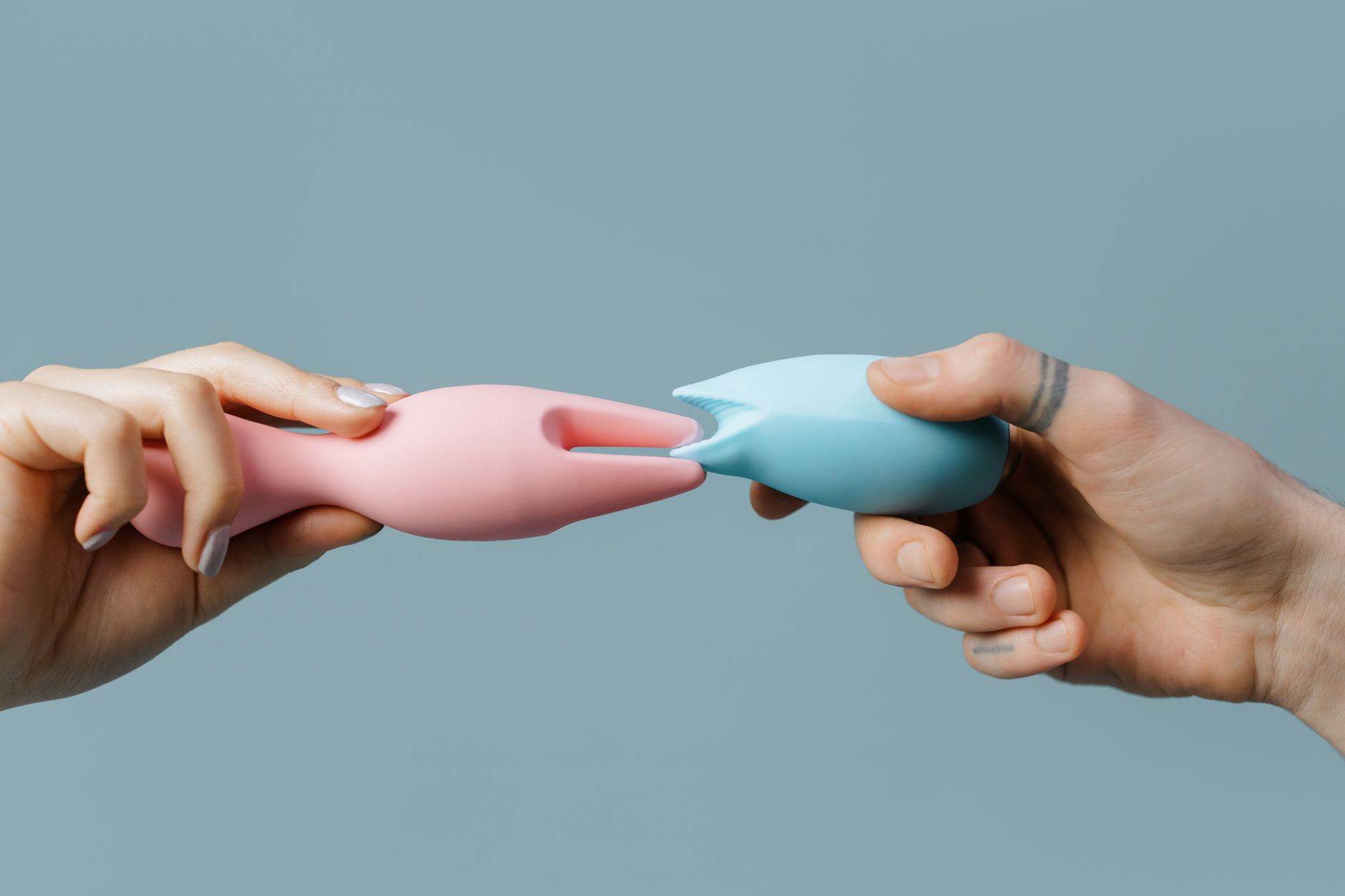
How to Ease Into Lemon Vibrators if You're New to Toys and Nervous
You don't have to feel ready to start exploring. Here's exactly how to move at your own pace, quiet the noise in your head, and find out what pleasure actually feels like for you.
Nervousness about trying a lemon vibrator is so normal it's practically the default. You're considering something new, something that might feel unfamiliar or exposed, and your brain is running through every possible way that could feel awkward. That's not a sign you shouldn't do it. That's just what happens when we're about to try something vulnerable.
Here's what I've learned working with couples and individuals through this exact moment: the anxiety almost always shrinks once you actually start. But you have to start on your own terms, not on anyone else's timeline.
You probably won't feel fully ready. Ready is the feeling you get after you've already done something once. What you can do right now is become willing. And those are different things.
Willing means you're curious enough to try. Willing means you've decided this is something that matters to you, even if it feels awkward. Willing means you're going to move slowly and stop whenever you need to. Willing is enough. You don't need ready.
Start here: spend a week just thinking about it. Not obsessing. Just noticing when the thought crosses your mind. Notice whether it feels like dread or excitement or both tangled together. Notice what story you're telling yourself about what could go wrong. Usually those stories are old. Usually they're not actually about a lemon vibrator at all.
Your environment is doing half the work for you. If you feel rushed or exposed, your body won't cooperate. Your nervous system will stay on guard.
So pick a time when you have at least 45 minutes completely alone. Not rushed. Not listening for someone to come home. Not checking the clock. Pick a space that feels private and where you feel genuinely comfortable. Your bedroom works. A locked bathroom works. What matters is that part of your brain can actually relax.
Warm up the space. Light if you want it. Sound if you want it. Some people need absolute quiet. Some people need music loud enough to stop thinking. You get to figure out what actually settles your nervous system.
Have water nearby. Have your phone on silent, or leave it in another room. Have the lemon clitoral vibrator within reach but not staring at you. This isn't about performative romance. This is about removing friction so your body can actually pay attention.
The biggest mistake people make is turning it on immediately and cranking up the intensity. This basically guarantees two things: shock and regret.
Here's the actual protocol. First time, you're doing four things and nothing else:
One: Touch the toy while it's off. Let your hand get used to the shape and weight. This sounds trivial until you realize how much your brain is secretly terrified of the thing. Once your hand has held it for five minutes without the sky falling, something shifts.
Two: Turn it on at the lowest setting. Not inside or anywhere sensitive yet. Just turn it on and listen. Let the sound be familiar. Put it against your arm or your thigh. Your brain needs to know what it actually feels like before it tries to interpret it as pleasure or pain.
Three: Touch it to your outer labia very gently. Not directly on the clitoris. Just near it. You're mapping what different intensities feel like on different parts of your body. This takes ten to fifteen minutes. You're not trying to come. You're not trying to do anything except notice.
Four: Stop before it stops feeling good. This is crucial. You want your last memory of the experience to be positive. You want to think about it tomorrow and remember that it felt fine. That's the win. You leave wanting more, not feeling overstimulated or disappointed.
First time, you might not come. You might not even feel much. That's completely normal. Your body is learning. Your nervous system is saying hello to something new. That's the whole job.
Sometimes your brain will hijack things halfway through. You'll suddenly feel self-conscious or wonder if you're doing it right or hear a noise and completely lose focus. This is not a failure. This is just what nervous systems do.
When it happens, stop. Put the toy down. Breathe for thirty seconds. You can either pick it back up or you can call it done. Both are fine. You're not racing toward a finish line. You're building a relationship with this experience, and relationships take time.
If it keeps happening across multiple attempts, ask yourself what the actual fear is. Is it shame about pleasure? Is it a partner-related anxiety? Is it physical discomfort? Once you name the real thing, you can address it. Sometimes that means talking to a therapist or a partner. Sometimes it just means you need more time.
If you're nervous, the design of the toy matters. Lemon clitoral vibrators use gentle suction instead of intense vibration. That means the sensation is different from what you might be imagining. It's less jarring. It's often described as more intuitive, like the device is working with your body rather than overwhelming it.
The learning curve is shorter with suction-based technology. You don't need to spend weeks adjusting to bizarre sensations. Most people find it feels natural pretty quickly. And the intensity range on something like a lem vibrator starts low enough that you can actually explore at your own pace without feeling like you've jumped straight into the deep end.
If you're in a relationship, your partner doesn't need to be in the room. This is not a couple's activity unless you want it to be. This is you getting to know your own body.
If your partner knows you're exploring, that's useful information for them. It means they understand why sex might feel different for the next few weeks. It means they're not confused if you ask for something different. But they don't need to watch. They don't need to participate. You don't need to report back.
The second attempt is usually less scary but sometimes more frustrating. You're expecting something and your body might not cooperate exactly the same way. That's normal. Pleasure isn't consistent. It shifts based on stress, hormones, your mood, what you ate, whether you slept.
By the third or fourth time, something usually clicks. Your body recognizes the sensation. Your brain stops running a security check every thirty seconds. You can actually feel what pleasure is supposed to feel like when you're not also managing a massive anxiety response.
That's when you might want to try: spending more time warming up before turning on the toy, exploring different patterns if your lemon vibrator has multiple settings, or touching different areas and noticing what actually feels good versus what feels like you think should feel good.
If after five or six attempts, nothing is shifting and anxiety is actually increasing, that's worth talking to someone about. A therapist who specializes in sexual health or relationship dynamics can help you figure out whether this is about the toy specifically or whether there's something deeper happening with shame, past experiences, or relationship dynamics that needs attention.
That's not a failure. That's actually wisdom. Some blocks need more than a toy and privacy. And getting support with those is one of the best decisions you can make for your long-term relationship with pleasure.
Most people describe a shift around week two or three. Not a magical transformation. Just a quieting. The nervousness doesn't disappear entirely, but it becomes quieter than curiosity. Your body starts to recognize the sensation as something your nervous system doesn't need to defend against. Pleasure becomes possible because safety has been established first.
And then something interesting happens. You start having opinions about what you like. You start noticing that maybe this pattern feels better than that one. Maybe you want more time on one setting before moving to another. Maybe you realize you prefer a certain time of day or certain circumstances.
That's you, genuinely exploring what works for you. Not what you thought should work. Not what you saw online. What actually works for your body and your nervous system. That clarity, that ownership, that's the whole point.
Completely normal. Your body is learning. The first time is usually about acclimation, not about sensation or pleasure. Some people need three or four attempts before their nervous system relaxes enough to actually feel anything beyond anxiety. That's exactly how it's supposed to go.
There's no hard timeline. If you need a week between attempts while your nervous system settles, take a week. If you want to try again in two days, that works too. The goal is building a positive association, not pushing yourself into discomfort. You'll know you're ready for the next attempt when you think about it and feel neutral or interested rather than dreadful.
Yes. Many people actually have their first orgasm with a lemon clitoral vibrator because the sensation is so different from manual stimulation. The suction works with your body's natural response in a way that can sometimes make orgasm more accessible. But that's not the goal of easing in. The goal is comfort and exploration. Orgasm is a possible side effect, not the point.
That's a conversation to have before or after, depending on what feels right to you. The short version: a toy is not a replacement. It's a tool for you to understand your own pleasure. That knowledge actually makes sex with a partner better because you know what you like. But this is your exploration. Your partner's insecurity isn't your responsibility to manage. If they can't support you learning about your own body, that's actually important information about the relationship.
The right way is whatever way feels good to you and respects your body's actual responses. Some people use toys daily. Some use them once a month. Some prefer suction. Some like vibration. Some want to be alone. Some want their partner nearby. All of that is right. The only truly wrong approach is forcing yourself to do something because you think you should.
When the lowest setting stops feeling novel and you're genuinely curious about what else is available, you're ready. That might be your second session. That might be your tenth. There's no schedule. You'll feel it because curiosity will be louder than anxiety. When that happens, try one notch up from wherever you are. You can always go back down.
The fact that you're thinking this through, that you're considering moving slowly, that you're paying attention to your own anxiety rather than pushing past it—you're already doing the hardest part. Easing in is not about the toy. It's about respecting yourself enough to let something new unfold at a pace that actually works for your nervous system.
That's the foundation. Everything else follows from there. When you're ready, The Lem Shop has what you need. But first, give yourself permission to be exactly as nervous as you actually are.